
Workforce training, re-entry support, and rehabilitation professionals from across the corrections and workforce development landscape recently gathered at Sheridan Correctional Center in Illinois for a convening focused on a simple but powerful question:

Why does this program work here?
Hosted by the Home Builders Institute (HBI), a national nonprofit that trains, credentials, and connects individuals to careers in the skilled trades, the convening brought together leaders from corrections, workforce development, education, behavioral health, and community-based organizations to examine how workforce training contributes to successful rehabilitation and re-entry outcomes.
The day began with a tour of HBI’s training programs at Sheridan, where guests observed instruction in multiple skilled trades, engaged directly with learners, and gained insight into the partnership between Home Builders Institute and the Illinois Department of Corrections (IDOC).
During welcoming remarks, HBI President and CEO Ed Brady highlighted the more than 20-year partnership between HBI and IDOC and the impact of HBI’s workforce training model at Sheridan. Today, the program serves approximately 120 participants daily across four trades, helping participants build skills, structure, and confidence as they prepare for careers in the skilled trades. Beyond the shop, released HBI graduates secured jobs with wages averaging 46.5% above the Illinois state minimum wage — a powerful indicator of how workforce training can translate into real economic opportunity after release.
The discussion that followed revealed a common theme: rehabilitation works best when organizations work together.
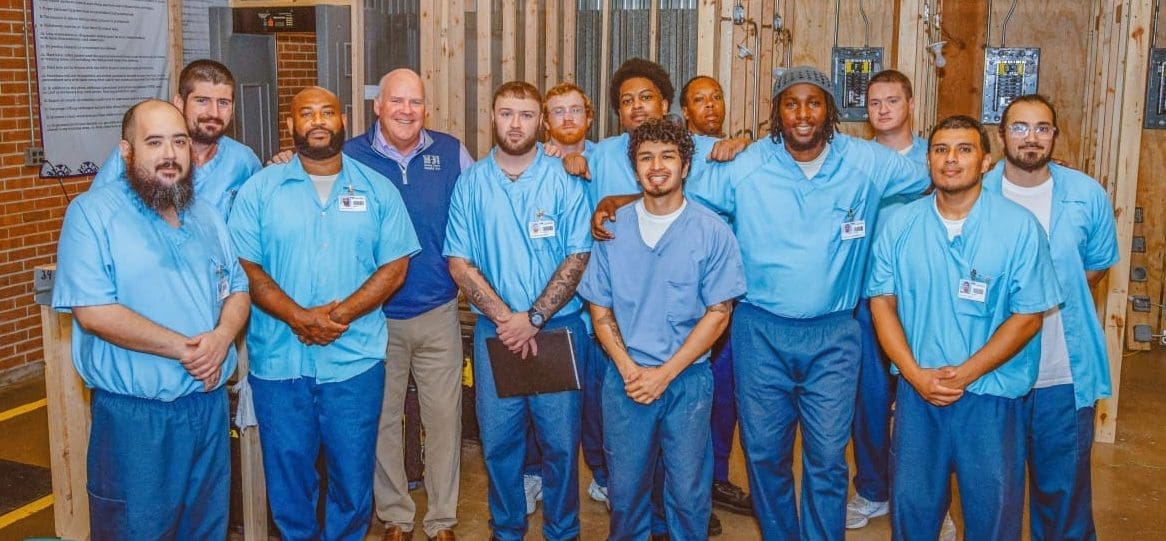
Representatives from corrections, treatment services, workforce development, and re-entry programs described how collaboration across disciplines creates consistency, accountability, and support for participants throughout their rehabilitation journey.
Duke Johnson, Substance Abuse Counselor CADC from WestCare, shared how coordination between treatment providers and HBI instructors helps reinforce participant success. At Sheridan, partners like WestCare play a critical role in reinforcing the structure, accountability, and holistic support that help workforce training translate into long-term re-entry success.
Others described how hands-on trade training provides structure, purpose, and a physical outlet that complements educational, counseling, and treatment programs occurring throughout the facility.
Lauren Joyce Hensel, Manager of Workforce Programs at HIRE360 Chicago offered another perspective, describing how programs like HBI help individuals build not only economic opportunity, but also social and professional capital. Many attendees echoed similar observations, noting visible increases in confidence, self-worth, professionalism, and personal accountability among participants as they progress through training.
Leaders at Sheridan Correctional Center reflected on the professionalism they routinely observe when interacting with HBI participants, noting the confidence, communication skills, and personal growth demonstrated by individuals engaged in HBI’s training program.
Survey feedback collected following the convening reinforced these themes. Participants indicated they would recommend HBI host a similar convening in the future. Additionally, 78% reported identifying new opportunities for collaboration, and 78% reported forming connections they intend to continue following the event.
Perhaps the strongest message from the day was that successful rehabilitation is not achieved through a single program. Instead, it is built through partnerships among corrections professionals, educators, employers, counselors, workforce practitioners, and community organizations working toward a shared goal.
As the convening concluded, participants expressed a desire to continue the conversation and explore ways to strengthen collaboration across systems and states. The enthusiasm generated throughout the day reflects a growing recognition that workforce training plays a vital role in helping individuals prepare for successful careers, stronger communities, and long-term success after release.
For HBI and its partners, the Sheridan Convening served as both a celebration of what has been accomplished and a reminder that meaningful rehabilitation is strongest when opportunity, accountability, and collaboration work hand in hand.
To learn more about HBI’s workforce training model — or to explore how partnership can expand access to skilled trades training in your community — visit HBI.org or connect with our team.